



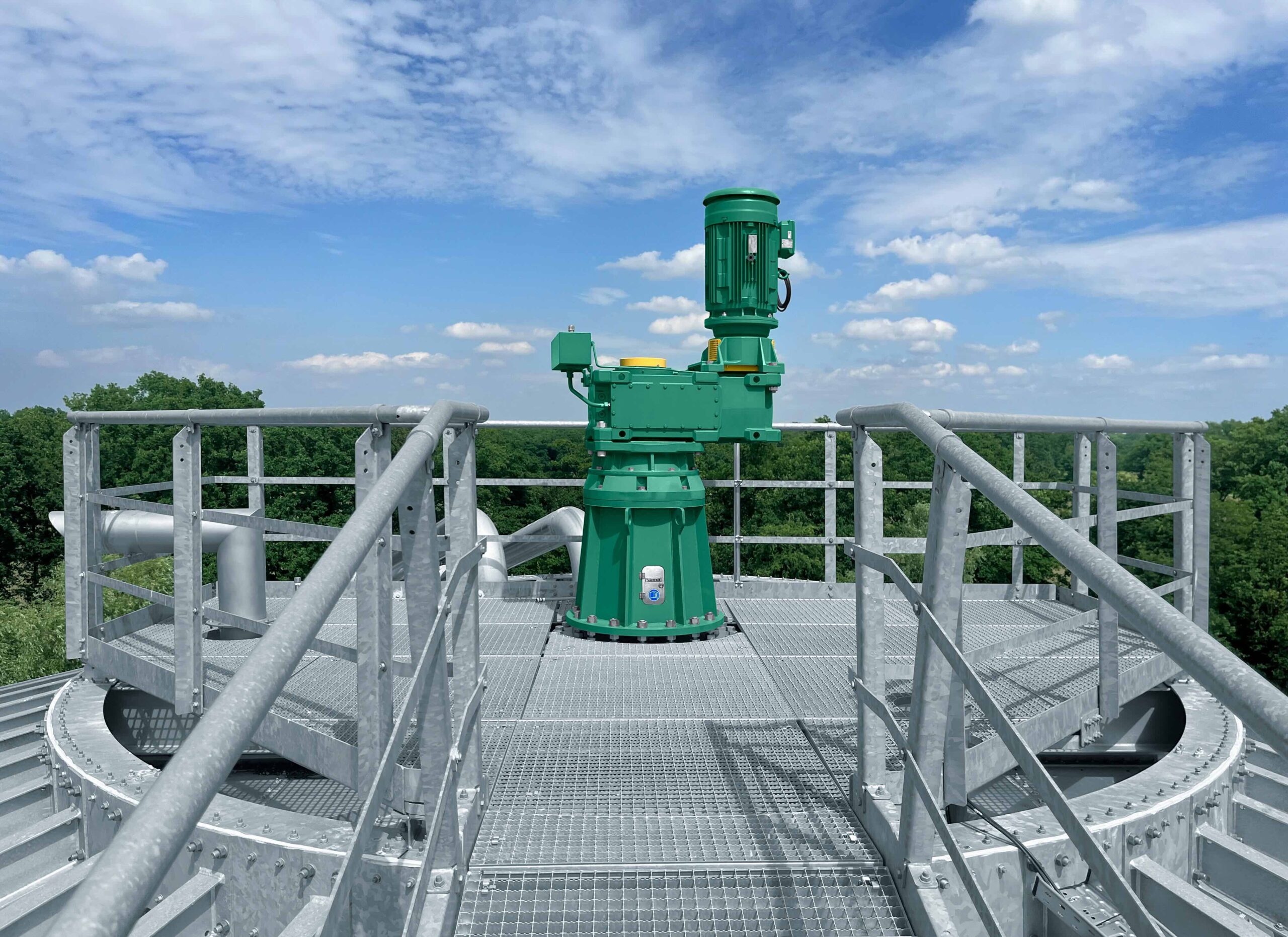
The plant varies daily feed between 35 and 80 tonnes to match gas output to demand, with a 30kW central agitator handling the resulting variation in substrate
A biogas plant near Krefeld in western Germany is controlling gas production through variable substrate feeding, using a gas store to balance short-term fluctuations, as operators across the country look for business models beyond expiring EEG feed-in tariff periods.
Between 35 and 80 tonnes are fed into the digester daily depending on demand forecasts, with the mix determined by feedstock availability. Inputs include slurry, manure and vegetable growing residues, principally potato and onion waste. Material is shredded and diluted with recirculate before entering the tank.
The 20m steel digester is 18m in diameter with a maximum volume of 4,489m³. The tank manufacturer specified a Suma Z-Mix central agitator, sized using CFD simulation. The 30kW unit runs continuously at a rated 14rpm via a frequency converter, with flow-optimised paddles generating vertical mixing. Temperature sensors across the tank are used to monitor homogenisation and check for layering.
'The demand-driven approach requires a high degree of flexibility – both in plant operation and in the biology within the fermenter,' said Dominik Stimmelmayer, team leader for application support at Suma. 'Plant technology is needed that can reliably manage changing process requirements.'
A planned increase in the manure fraction will raise dry matter content from 8% to 10%, and the agitator's specification was chosen with that in mind. Drive, bearings and seal are externally accessible for maintenance without opening the tank.
The operator also intends to integrate a fuel cell into the plant, which Suma said would allow more flexible use of the biogas produced.