



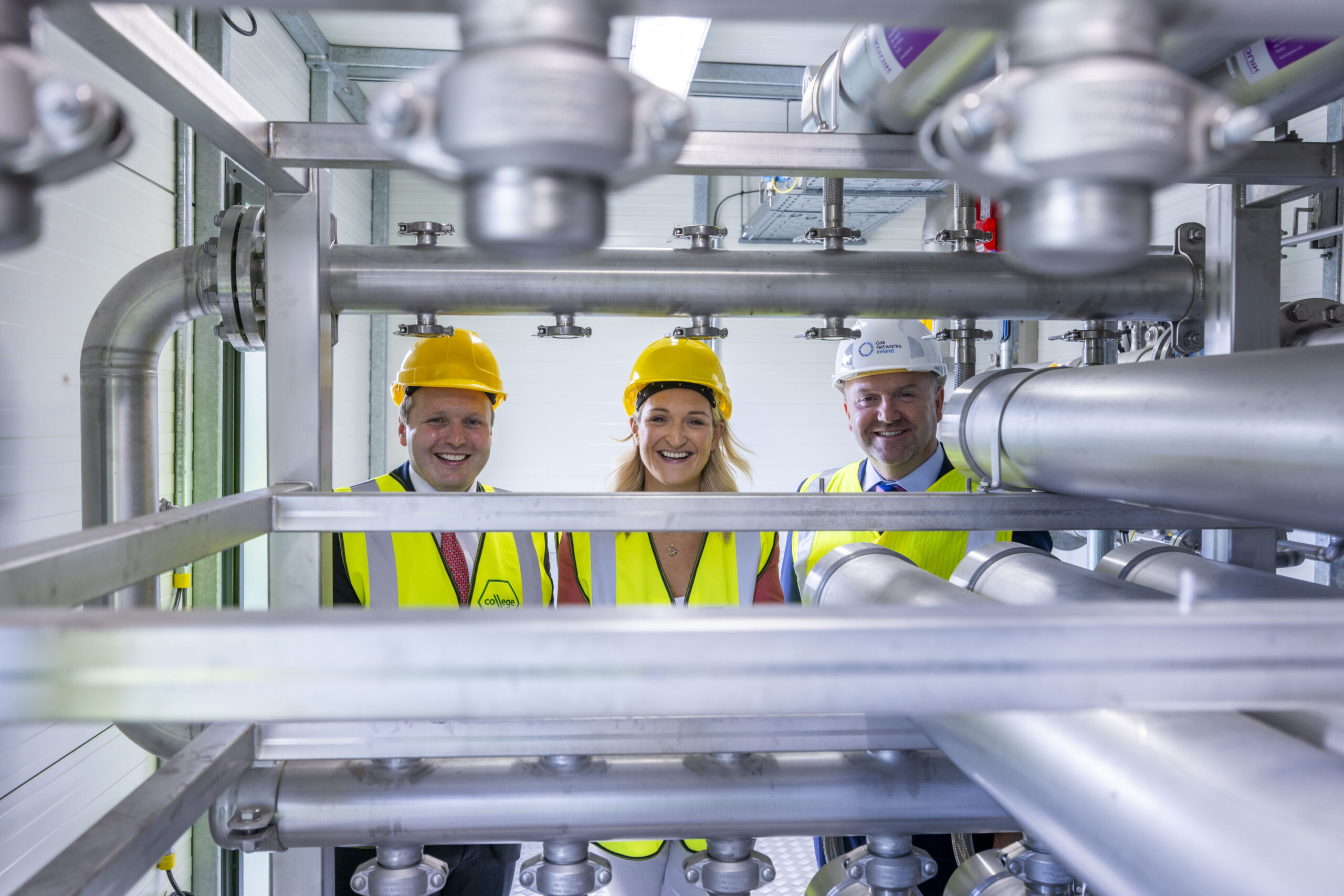
Gas Networks Ireland has successfully connected College Group's €30 million anaerobic digestion facility in Nobber, Co. Meath, to the national gas network, marking the second major biomethane producer to achieve this milestone in a month.
The facility, which received €2.4 million in government capital grant support, has an annual production capacity of up to 75 gigawatt-hours (GWh). It will transform primarily commercial food waste and material from College Group's wider operations through anaerobic digestion into renewable biomethane gas compatible with Ireland's existing gas infrastructure.
College Group has already established an offtake agreement with Flogas to supply BioCNG fuel for heavy goods vehicles, diverting a proportion of its biomethane production away from the national grid to power its own operations and fleet.
This circular model — converting waste into renewable fuel and using that fuel to power both facility operations and transport — exemplifies the resource-efficient production methodologies the sector is developing.
The connection signals significant industry confidence. Gas Networks Ireland now has connection agreements with seven biomethane producers representing an aggregate projected output of almost 13 per cent of the State's 2030 target of 5.7 terawatt hours (TWh) of annual biomethane production.
"This is the second biomethane facility to connect directly to the national gas network this month and is a powerful signal of the momentum now building behind Ireland's biomethane industry," David Kelly, Chief Executive Officer of Gas Networks Ireland, said. "The connection of another producer demonstrates that Ireland has the capability to develop, connect and utilise indigenous renewable gas at scale."
College Group, which has operated at its Nobber site since 1989 and now employs more than 150 people, is part of a broader shift towards integrated bioeconomy platforms in Ireland. The company's facility sits within what it terms a "circular economy park" where waste products across the site are converted into renewable fuels and energy, delivering close to 200,000 tonnes of CO₂ savings annually.
The anaerobic digestion process yields a secondary product of commercial significance: digestate, a nutrient-rich biofertiliser that can replace chemical fertilisers and recycle nutrients back into food production systems. This dual-product output strengthens the economic and environmental case for biomethane infrastructure development.
Speaking at the facility's official launch, Helen McEntee, Minister for Foreign Affairs and Trade, emphasised the energy security dimensions of expanding domestic renewable gas production. "Producing more of our own renewable energy here in Ireland from resources generated within our own economy means greater resilience and less reliance on imported energy," she said.