




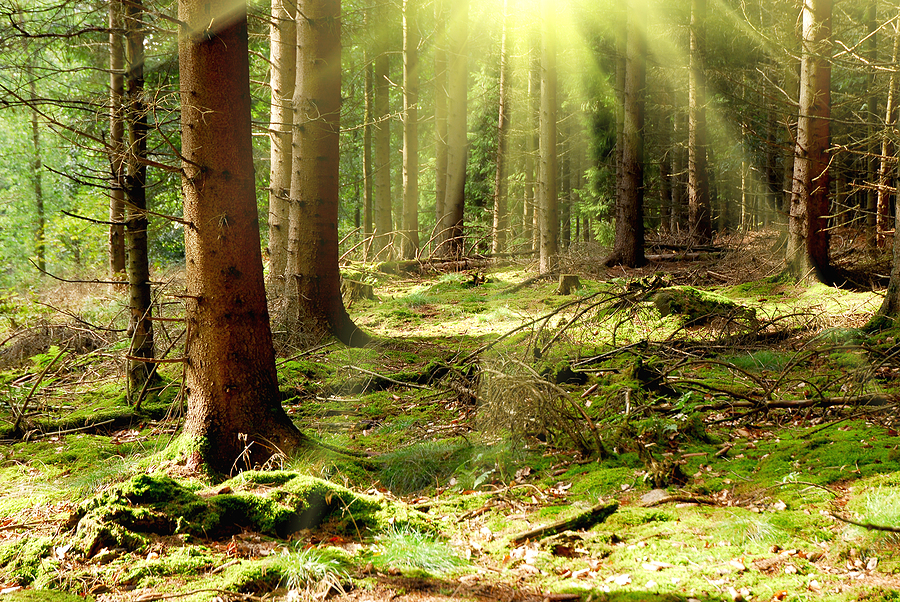
A short documentary making the case for bioenergy as a tool for wildfire prevention premiered at the European Parliament in Brussels yesterday, hosted by MEP Sakis Arnaoutoglou.
'Fuel the solution, not the fire' brings together local voices from Attica, Tuscany and Catalonia to show how active forest management — and the use of residues for bioenergy — can reduce fuel build-up and strengthen landscape resilience ahead of Europe's summer fire season.
The screening was followed by a panel discussion featuring Arnaoutoglou, Hélène Koch of the Confederation of European Forest Owners and Josep Milà of EUSTAFOR, moderated by Irene di Padua of Bioenergy Europe.
The event drew attention to the worsening scale of Europe's wildfire problem. According to the European Commission's Joint Research Centre and EFFIS, more than one million hectares burned across the EU in 2025, surpassing the previous record of nearly 990,000 hectares set in 2017.
The 2025 season released an estimated 43 megatons of CO2 — equivalent to Denmark's annual greenhouse gas emissions, or roughly a quarter of the EU's total LULUCF sink.
Jérémie Gelen of Bioenergy Europe, who presented on the case for active forest management, said bioenergy was not an end in itself, but that where residues were available and sustainability criteria met, it could provide a financially viable local outlet for year-round forest maintenance.
Josep Milà of EUSTAFOR warned that waiting until a stand was burning risked wiping out generations of forest growth alongside nature and climate efforts, and called for proactive fuel load reduction through the forest bioeconomy.
Jean-Marc Jossart, secretary general of Bioenergy Europe, said Europe could not respond its way out of the wildfire crisis and called for long-term investment in preparedness, describing prevention as both a public safety measure and a rural development opportunity.