



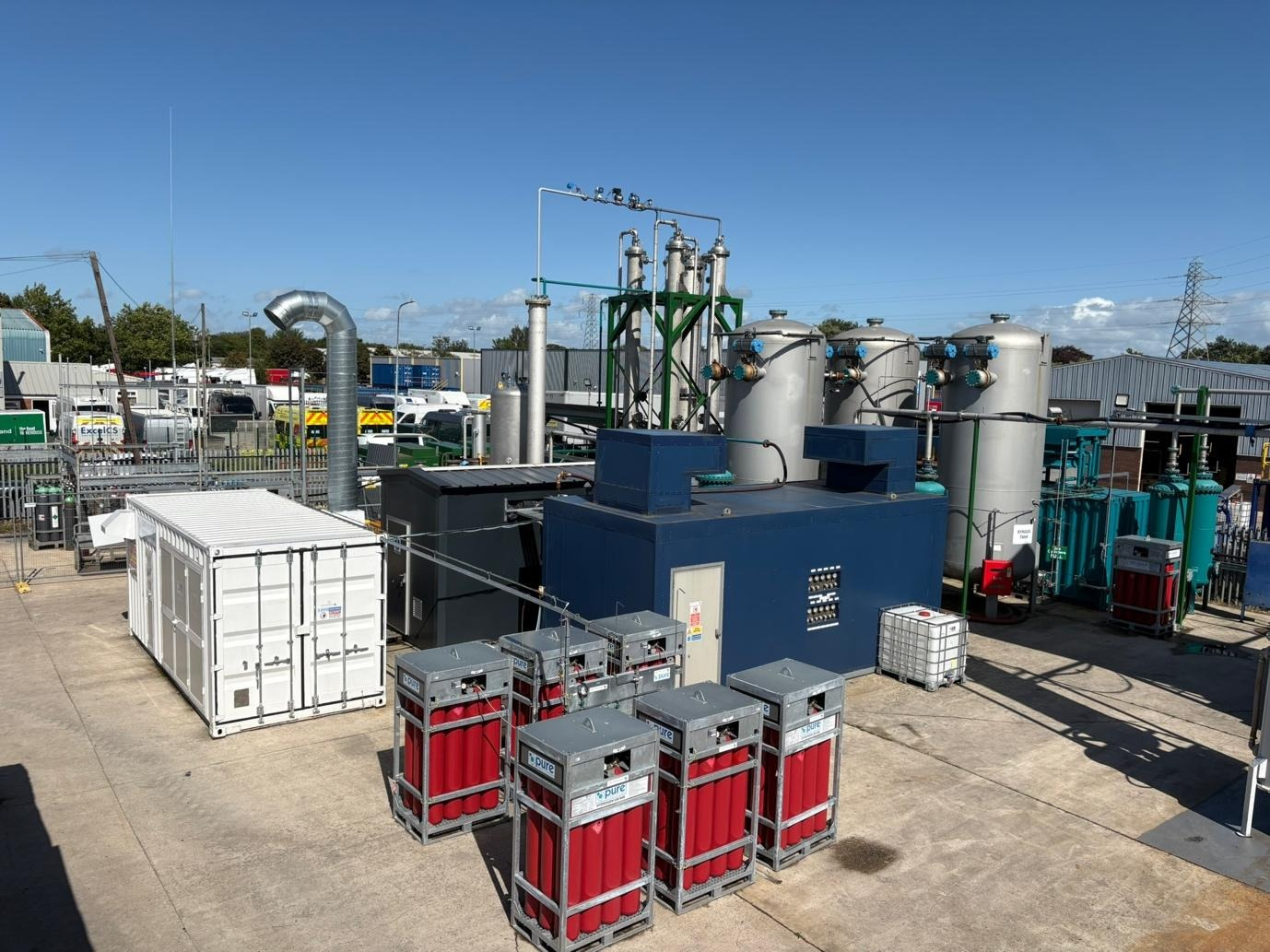
Welsh clean energy company Compact Syngas Solutions has unveiled a next-generation waste-to-energy plant following the successful conclusion of a £4 million government-funded demonstration programme.
The Deeside-based firm developed its MicroHub plant under the Department for Energy Security and Net Zero's Hydrogen BECCS Innovation Programme.
The system gasifies non-recyclable waste and refuse-derived fuel to produce hydrogen-rich syngas, which is then cooled, filtered and scrubbed to yield clean hydrogen, with carbon captured in both solid biochar and gaseous form.
A key feature of the technology is its use of water rather than chemical solvents such as amines for CO₂ scrubbing.
During trials, the plant captured more than 90% of CO₂ from syngas, exceeding the programme's 75% target. The system logged more than 1,000 operating hours across multiple 100-hour continuous runs, advancing the technology to Technology Readiness Level 7.
A carbon lifecycle analysis confirmed that hydrogen produced by the system meets and exceeds the UK Low Carbon Hydrogen Standard, with some configurations delivering net-negative emissions.
At commercial scale, a MicroHub using eight of the company's Gasifier 1000 units could process 200 tonnes of waste per day, yielding five tonnes of hydrogen at above 99% purity alongside electricity generation. A 1MW plant would produce 25kg of hydrogen and 650kW of electricity per tonne of waste feedstock.
CSS said the MicroHub is designed to serve waste, transport and power markets at community scale, offering an alternative to incineration and landfill with significantly lower carbon emissions.