



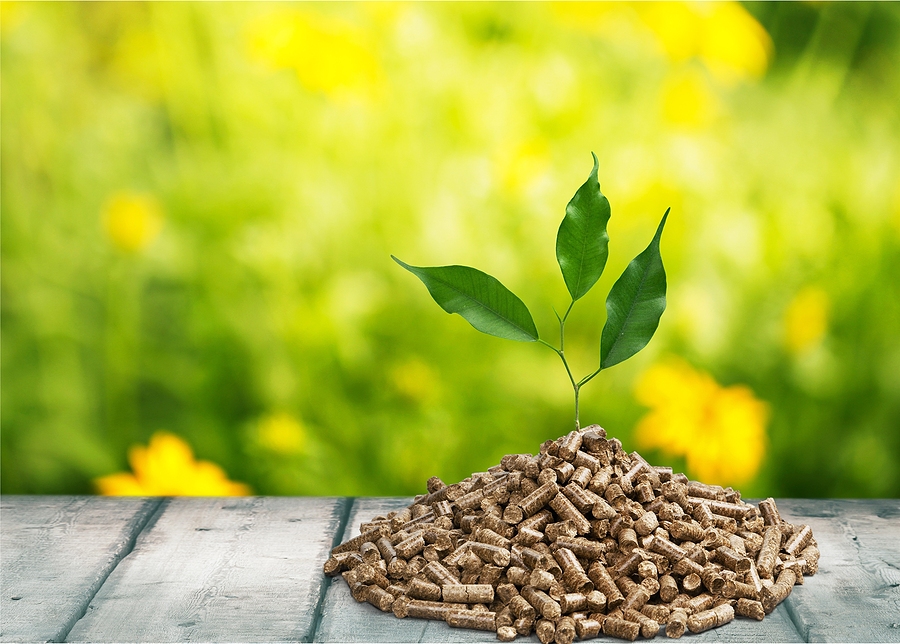
Engineering firm Jenike & Johanson has been awarded a patent for a feeding technology designed to address one of the persistent practical obstacles in biofuels manufacturing: reliably introducing low-density feedstocks such as agricultural residues, forest biomass and municipal solid waste into high-pressure reactor systems.
The challenge — sometimes described as the 'pressure gap' — arises because conventional feeding approaches tend to cause bridging, compaction and flow instability when moving loose biomass into pressurised environments. This has typically required pre-processing steps such as grinding or pelletising, adding cost and limiting the commercial scalability of biomass and waste-to-energy processes.
The patented system, which the company has named Jen-Zero, centres on a diverging pressurisation geometry. Where traditional designs use converging geometries that tend to compact material, the diverging approach allows material to discharge in a near free-fall manner, promoting stable flow without restriction.
The design is also said to address biomass springback — a known phenomenon in which compressed material expands on pressure release, causing jams and flow obstructions. According to Jenike & Johanson, the geometry mitigates this effect, producing a continuous, pulse-free feed directly into high-pressure reactors without the need for pelletising or other preparatory steps.
The company says systems based on the technology are capable of handling up to 1,000 tonnes per day of biomass or municipal solid waste. Lead inventor Jayant Khambekar described the patent as a validated engineering solution built on bulk-solids science, offering the industry a reliable pathway to overcome feeding limitations that have constrained progress in sustainable energy.