



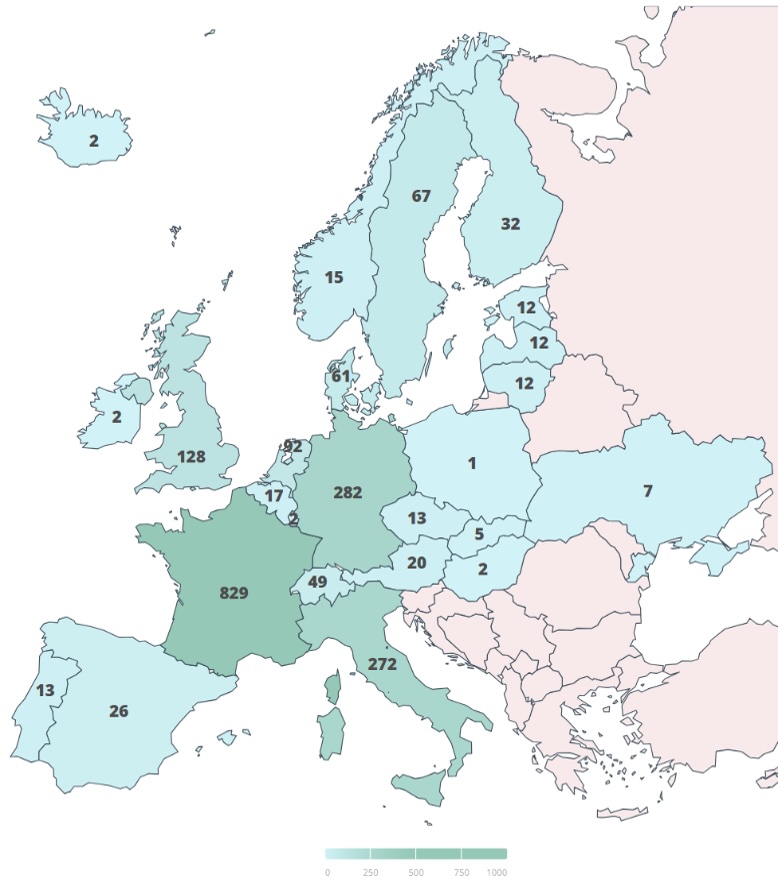
Europe's installed biomethane production capacity reached 8.2 bcm per year by the end of the second quarter of 2026, having added more than 1 bcm in a single year — a 17% increase on 2025 — according to the European Biomethane Map published by the European Biogas Association (EBA) and Gas Infrastructure Europe (GIE).
The number of plants in operation across Europe rose from 1,678 to 1,975 over the same period, with 327 new facilities commissioned, though net growth is lower as some plants also closed during the period. Average plant size stands at 472 Nm³/h, with significant variation across markets: Denmark operates fewer but substantially larger facilities averaging 1,528 Nm³/h, while France, which leads in plant numbers, averages 212 Nm³/h. Italy and Germany operate larger installations averaging 667 Nm³/h and 607 Nm³/h respectively.
Investment commitments have risen to €36 billion, up from €28 billion reported the previous year. If fully realised, the EBA says these investments are expected to deliver a further 9 bcm per year of production capacity by 2030.
Despite the momentum, the EBA warns that growth remains heavily concentrated, with five countries currently accounting for 95% of European biomethane production. A 2026 Guidehouse study puts the EU-27's biomethane potential at 31–32 bcm for 2030, rising to as much as 184 bcm by 2050.
Harmen Dekker, chief executive of the EBA, said regulatory complexity and uncertainty were holding the sector back from its full potential. He pointed to a straightforward near-term opportunity: existing plants are currently operating at an average of just 70% of capacity. 'Allowing existing plants to produce at higher capacity, alongside reducing complexity in access to feedstock, facilitating grid connections and accelerating permitting, would enable the sector to scale much more rapidly,' he said.
Lucie Boost, secretary general of GIE, said existing gas infrastructure was ready to connect biomethane production with demand across borders and strengthen Europe's energy security.