



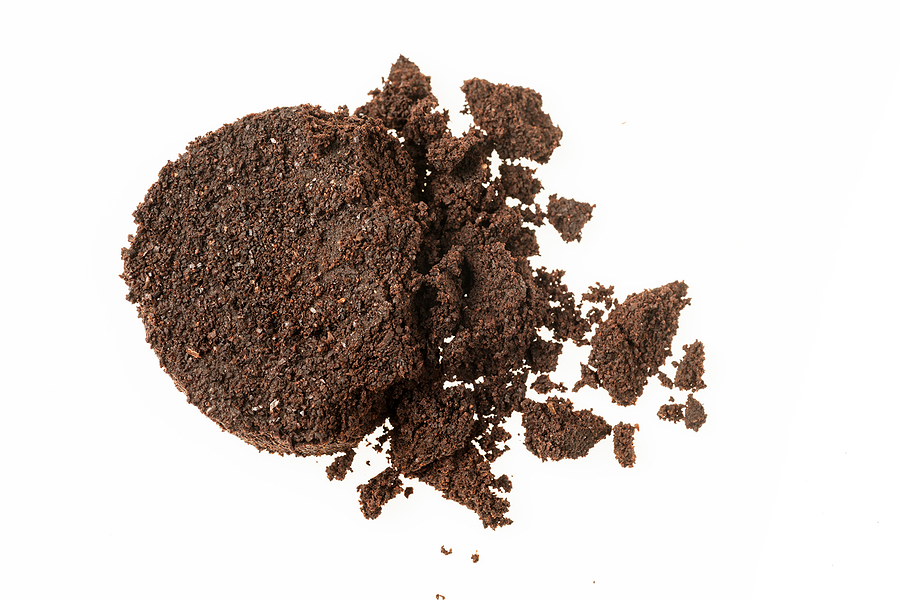
Nestlé UK has scaled spent coffee utilisation at its Tutbury manufacturing facility, using processed coffee waste as biomass fuel to generate steam for Nescafé production. The programme has reduced waste sent to landfill by 94% since 2024 and supplied 47% of the facility's total steam requirements in 2025.
The process involves pressing spent coffee beans to remove residual moisture, then feeding the dried material into a biomass boiler. Generated steam is directly integrated into the Nescafé manufacturing process, creating a closed-loop thermal energy system within the facility.
Tutbury has recycled spent coffee since 2015, but conversion to biomass fuel generation represents a significant step change in utilisation efficiency. The facility now uses 97.7% of spent coffee beans as fuel, with residual material comprising only unavoidable contamination.
At industrial scale, spent coffee represents a substantial, consistent feedstock. A typical coffee manufacturing facility generates tens of thousands of tonnes annually. Nestlé's approach demonstrates that on-site energy generation from process byproducts can meaningfully offset fossil fuel boiler requirements, particularly where thermal energy demand is concentrated and seasonal variation is minimal.
Mike Parr, Industrial Services Manager at Tutbury, noted that incremental improvements in energy efficiency and waste reduction compound significantly across large manufacturing sites. The programme has prompted evaluation of additional byproduct feedstocks — particularly cocoa husks — to further increase renewable steam generation.
The initiative aligns with broader industry trends toward circular sourcing and embedded decarbonisation. Beverage and food manufacturers with high thermal energy demands have begun systematically evaluating process byproducts as potential biomass feedstocks, particularly where infrastructure exists for moisture removal and boiler integration.
Nestlé's result — 47% renewable steam in 2025 — indicates that single-stream byproduct utilisation can achieve material energy substitution without external feedstock procurement or logistical complexity.