



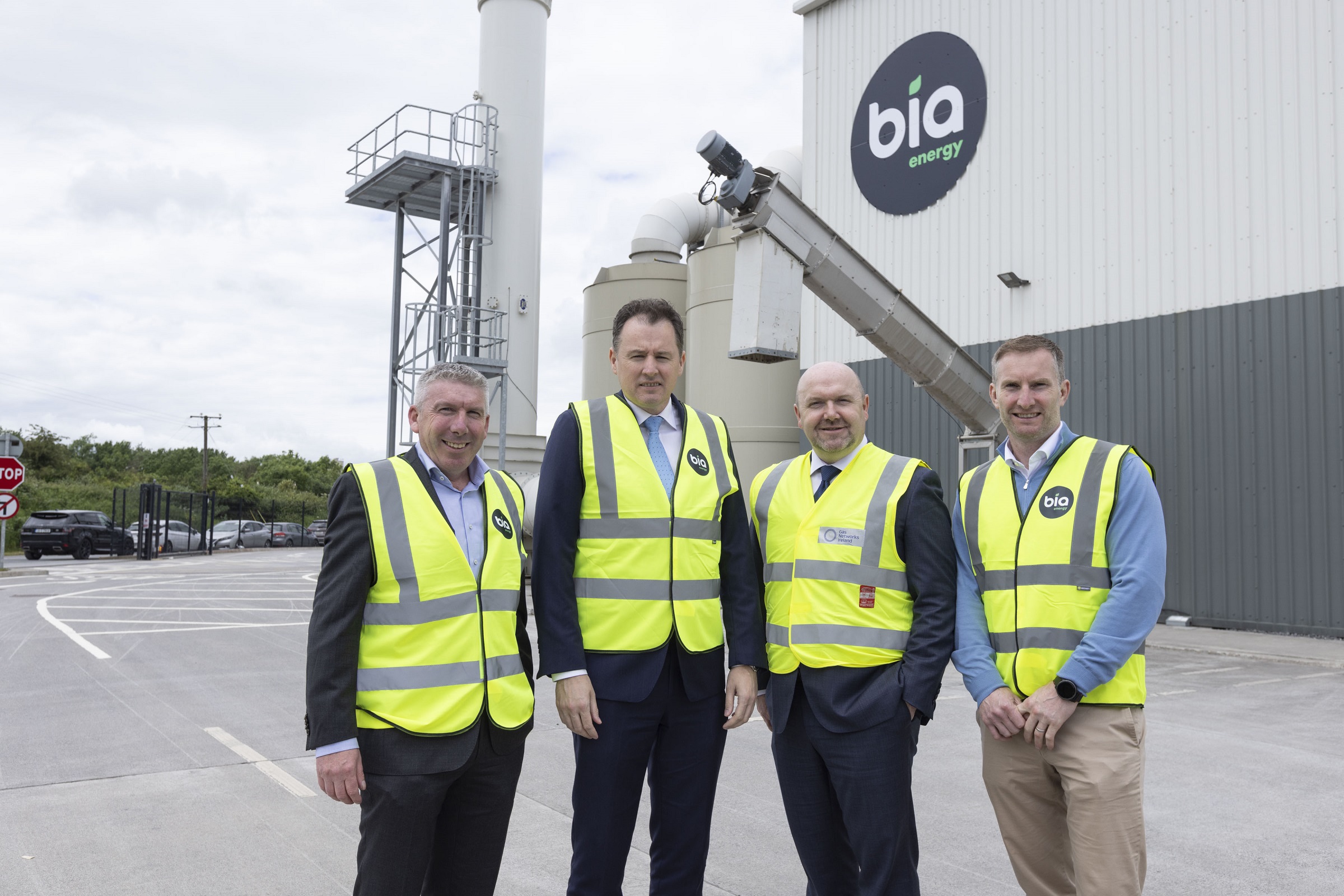
Gas Networks Ireland (GNI) has connected Bia Energy's biomethane production plant at Huntstown, Dublin, directly to the State company's gas network, marking the first direct injection facility to the Irish gas infrastructure.
Bia Energy's €90 million facility will supply enough renewable gas to generate 120 gigawatt hours (GWh) of electricity annually - equivalent to average daily electricity consumption across the Republic at approximately 90 GWh.
The plant processes surplus packaged food from retail and hospitality, alongside agricultural and food production waste, via anaerobic digestion to produce biomethane. The process generates a fertiliser byproduct that displaces chemical fertiliser use in farming. Bia Energy's Dublin facility alone will replace approximately 3,000 tonnes of chemical fertiliser annually.
The company received €3.9 million from the Government's National Biomethane Capital Grant Scheme towards the €90 million investment.
GNI has connection agreements with seven biomethane producers in total, including Bia Energy. The pipeline of projects underpins Ireland's target to source 10 per cent of gas demand from biomethane by 2030.
Gas supplies approximately 50 per cent of electricity generation across the Republic, alongside significant industrial and commercial heating load. Biomethane provides 'an immediate and practical decarbonisation solution for energy users', allowing existing gas infrastructure and equipment to remain in service whilst reducing emissions and enhancing energy security.
Brendan Traynor, chief executive of Bia Energy, said biomethane would 'play an important role in Ireland's energy future', improving energy supply security, cutting carbon emissions and reducing reliance on chemical fertiliser.
Minister for Agriculture Martin Heydon described the connection as 'a significant step forward' in developing an Irish renewable gas industry, demonstrating conversion of agricultural and organic waste into a valuable renewable energy source.