



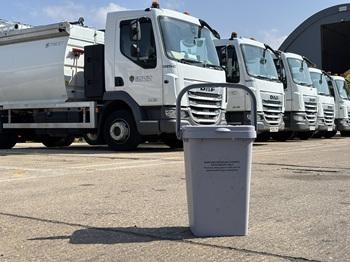
Bedford Borough Council has diverted over 1,400 tonnes of food waste from landfill in the first three months of its weekly residential collection service, removing an estimated 86.8 tonnes of CO2 equivalent through anaerobic digestion.
Residents recycled 516 tonnes in June, demonstrating sustained participation following the scheme's launch at the end of March. All collected food waste is processed at a local Biogen facility, where it is converted into renewable energy fed to the National Grid and nutrient-rich fertiliser for local farms.
The scheme operates as a complementary service to home composting, accepting food types unsuitable for garden composting such as cooked food, meat and dairy. Residents are encouraged to use home composting for fruit and vegetable peelings where possible.
The rollout has experienced some collection delays, particularly during recent heatwaves. Where scheduled rounds were not completed on their assigned day, crews returned the next working day to finish the route. The council has reviewed addresses with multiple missed collections to identify operational patterns, improve crew training and update handover information for new teams.
Councillor Nicola Gribble, Portfolio Holder for Environment, said participation has exceeded expectations and thanked residents for their engagement as the service stabilises. The council acknowledged operational challenges during the launch phase and committed to continued performance improvement.
Operationally, residents are instructed not to place kitchen caddies inside outdoor food waste bins on collection day and to avoid black bin liners. The council recommends clean cereal or bread bags, or purpose-designed compostable liners, to contain waste. To reduce fly nuisance during warm weather, residents are advised to keep bin lids closed and rinse containers regularly.