



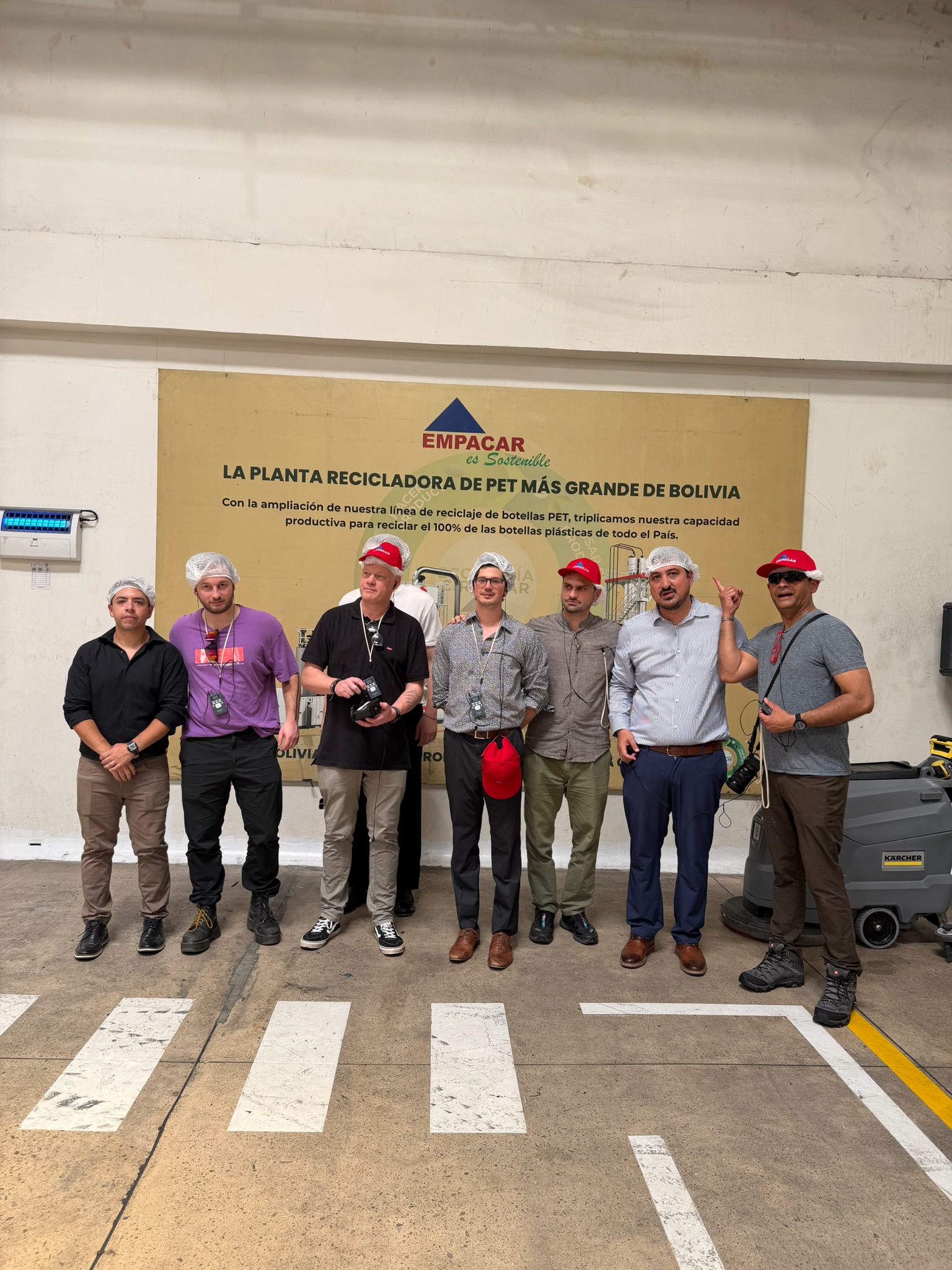
Empacar S.A., Bolivia's leading sustainable packaging company, launched CarbonX as a dedicated business unit to enter the global voluntary carbon market, targeting approximately 70,000 tonnes of CO₂ removal annually.
BioFlux designs biochar projects that pass certification, attract investment and scale profitably. Their role has been as a carbon removal advisor, helping to ensure that the project design, feedstock logic, application pathway, and certification strategy have been aligned from the start.
Why Guarayos?
The Guarayos region, in Bolivia's Santa Cruz department, has been devastated in recent years by record-breaking wildfires, with an estimated 12.6 million hectares being burned nationwide, which disproportionately impacted the Santa Cruz department. Fires have impacted over 9% of Bolivia's remaining intact forest cover, leading to significant destruction of natural habitats and ecosystems.
Many of these fires are the result of agricultural slash-and-burn practices, with the open burning of sawmill residues during dry months also contributing to the problem.
Open burning is also leading to severe adverse health problems for local communities. Burning season spikes in particulate matter have been linked to increased hospitalisations for respiratory illnesses, putting additional strain on Bolivia's infrastructure. Catastrophic wildfires destroy cacao, papaya and plantain crops, cultivated primarily by indigenous communities who rely on harvests for their subsistence.
For the forestry sector specifically, low-value woody residue is typically managed by open burning and uncontrolled stockpiling. By converting this biomass into biochar, the company is able to provide an effective waste management system that addresses the twin issues of wildfires and harmful air pollution.
Guarayos was also selected because it sits at the centre of one of Bolivia's most active forestry corridors. The region has a dense concentration of sawmills, forestry operators, and timber logistics infrastructure tied to the broader Santa Cruz lowlands economy. Recent regional business reporting has described Guarayos as a "strategic centre" for forestry business and timber management in Bolivia. Almost 50% of the available biomass in Bolivia is concentrated in the area.
Historically, Guarayos has been deeply connected to Bolivia's timber economy. The region became a major forestry zone during the expansion of timber concessions in the 1980s and 1990s, and today still contains a large network of regulated sawmills processing tropical hardwoods from approved forest management plans. This industrial concentration of biomass is exactly what makes the location attractive for biochar.
There is also a geographically concentrated supply of low-value woody residues such as bark, chips, offcuts, and branch wood being generated every day.
From a carbon removal perspective, this is significant for two reasons.
First, it creates reliable feedstock density. Instead of hauling biomass hundreds of kilometres, the project can aggregate residues from nearby sawmills within a relatively short radius, which materially improves lifecycle emissions and economics.
Second, as covered previously, the significant share of these residues historically had very limited commercial value and were often openly burned or left to decompose, contributing to wildfires, air pollution, and methane emissions.
The region also has unusually strong alignment between biomass availability and agricultural demand. Guarayos sits within an active agricultural frontier where degraded soils, fertiliser costs, and water retention challenges create a natural use case for biochar application. That proximity between feedstock source, pyrolysis facility, and end-use farmland is a major operational advantage because it reduces transport complexity on both sides of the value chain.
Regulatory, logistical, and infrastructure challenges
A key challenge has been technology supplier validation to ensure that reliable equipment is purchased that can handle the project's scale of operations. This has required close alignment, iterative assumption testing, and continued back-and-forth with technology providers to ensure that design decisions remain technically robust before final on-site deployment.
The broader challenge has been adapting to a regulatory environment that was designed around traditional forestry and charcoal operations to accommodate biochar production, which is still a relatively new intervention in Latin America. In practice, this has meant focusing significant attention on feedstock sustainability and traceability, stakeholder engagement and community involvement, and feedstock logistics and transport to ensure the project meets both local regulatory requirements and international certification standards.
All sawmills in the Guarayos region are regulated, and biomass cannot be moved without formal certification, but the existing framework does not yet account for biochar as a distinct category. This has required Empacar to work closely with local authorities to bridge the gap between what the regulations currently cover and what the project involves.
In Bolivia, forestry activity is overseen by the national forestry and land authority, which is responsible for regulating forest operations, approving management plans, and enforcing chain-of-custody controls across the timber sector.
In practice, legally operating sawmills are required to maintain documentation that links timber flows back to authorised forestry activity. For a carbon removal project, that documentation is important because it helps demonstrate two things: first, that the biomass originates from regulated forestry operations; and second, that the project is using secondary residues rather than creating any incentive for additional harvesting.
Guarayos is well suited to this model because it has a strong concentration of forestry and timber-processing activity. That creates a continuous stream of low-value residues such as bark, chips, offcuts, and other non-merchantable material. Historically, these residues have had limited productive use and may otherwise be burned, stockpiled, or left to decompose.
To support consistent supply, the project is designed around a diversified network of regional sawmill partners rather than dependence on a single supplier. Feedstock availability, transport logistics, and seasonal variation are assessed upfront so that the production system can operate reliably across multiple lines while maintaining a conservative buffer against supply interruptions.
Verification is built into the operating model. Feedstock deliveries are tracked through supplier records, delivery documentation, mass-balance checks, and digital monitoring systems that link incoming biomass to production batches. This creates an auditable trail from residue sourcing through biochar production and final carbon removal reporting, which is tracked via a dMRV supplier, in this case Cula.
BioFlux is guiding Empacar through a detailed supply-chain due diligence process, looking beyond headline biomass volumes to verify sawmill sourcing, residue availability, legal documentation, chain-of-custody evidence, and traceability systems. That work is essential to show that the feedstock is not only available at scale, but also legal, residual, auditable, and additional from a carbon removal perspective.
What did the certification process involve?
Puro.earth may be less familiar to readers outside the carbon removal sector, but within engineered carbon removal it is one of the core pieces of market infrastructure. It is majority-owned by Nasdaq, which acquired a majority stake in 2021 to help scale carbon removal market infrastructure. It has certified more than 100 engineered carbon removal projects across multiple carbon removal pathways and issued more than 1.5 million CO₂ Removal Certificates, or CORCs, through the Puro Registry. Buyers and users of its infrastructure include large corporates such as Microsoft, Shopify, and Zurich Insurance, and hundreds of companies use the platform to procure carbon removals.
The certification process is rigorous because credits are not issued based on installed capacity or theoretical output. For biochar, the project has to document the full chain: eligible feedstock, baseline use of that biomass, production data, biochar quality, carbon stability, transport, final application, and lifecycle emissions. Independent auditors then review the evidence against the relevant methodology before credits are issued.
That shapes how the organisation accounts for carbon removal. It reports net removal, not gross biochar production. So the final CORC number has to deduct emissions from feedstock handling, transport, energy use, processing, and application. It also means every claim needs to be traceable back to real operating data: feedstock deliveries, production batches, lab results, inventory records, delivery records, and end-use application.
At industrial scale, that discipline matters. Small errors in moisture assumptions, batch tracking, transport distances, or carbon content can materially change the number of credits issued. So certification forces the project to operate with audit-ready data from the beginning, rather than trying to reconstruct the carbon accounting after production has already started.
What is the Biochar being used for?
Biochar has a range of potential end uses, including soil amendment, construction materials, filtration, and other industrial applications. For CarbonX, the primary near-term pathway is agricultural soil application, because that is where the local need, logistics, and carbon-removal integrity align most clearly.
The Guarayos area has a large agricultural footprint around the facility, including cropland, pasture, and degraded land where biochar can support soil performance. In parts of the Santa Cruz lowlands, producers face challenges around soil degradation, acidity, water retention, and fertiliser efficiency. That makes soil application a practical local use case, rather than a theoretical offtake market. The near-term plan involves direct soil application at the facility site, with composting for the group's soy plantations planned as the next phase once production stabilises.
BioFlux's role is to help ensure that this end-use pathway is credible, locally useful, and able to stand up to scrutiny. That means developing a robust understanding of the local soil and biophysical conditions before scaling application, including soil composition, land use, degradation risk, climate exposure, and agronomic suitability. The aim is to identify where biochar can create tangible benefits for farmers and communities, from improved soil performance and water retention to reduced dependence on synthetic inputs, while ensuring the pathway is robust enough for certification, buyer scrutiny, and long-term project credibility.
From a carbon removal perspective, soil application also provides a clear and well-established pathway for durable storage. It allows the project to link each batch of biochar to a defined application area, record the end use, and maintain the evidence needed for certification and audit.
The local context also shapes the economics. Keeping the biochar close to the facility reduces transport distances and makes the supply chain easier to verify. That is particularly important in an industrial-scale project, where logistics, traceability, and lifecycle emissions directly affect the net carbon removal claim.
Construction and filtration may become opportunities over time as local markets develop, but they are not the priority route today. For CarbonX, agricultural application offers the strongest combination of durable carbon storage, local agronomic benefit, shorter logistics, and a clear verification pathway.
As the local market develops over time, there is the potential to develop a range of value-added biochar-based fertiliser products, building on the composting work already planned for the group's soy plantations. For now, agricultural application offers the strongest combination of durable carbon storage, local agronomic benefit, shorter logistics, and a clear verification pathway.
A platform for Latin America
CarbonX is designed for replication, with multiple production sites under development in Bolivia and plans to expand the model across Latin America. BioFlux will continue as Empacar's development and certification partner for future sites, bringing the same end-to-end approach that turned a feasibility question in Guarayos into one of the region's most significant carbon removal projects.