



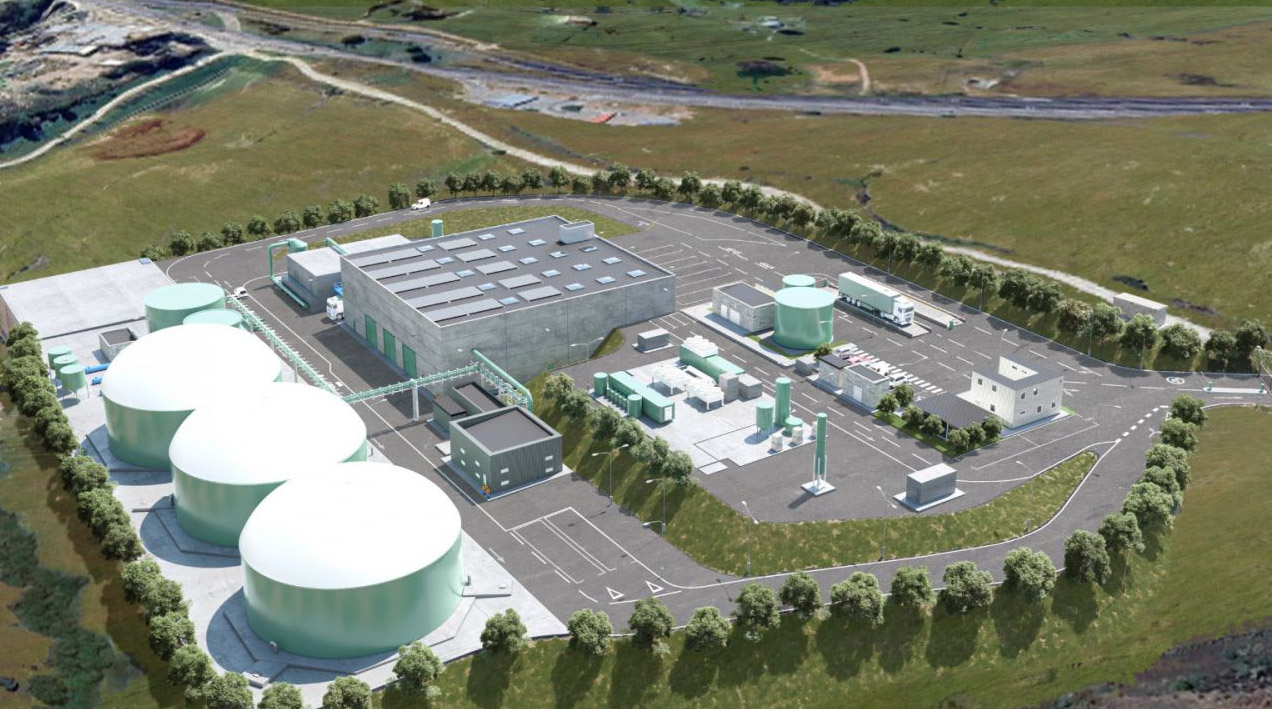
WELTEC BIOPOWER, together with environmental services provider PreZero and renewable energy company Enagás Renovable, has begun construction of a biomethane plant north of Madrid.
The facility in Colmenar Viejo will process up to 75,000 tonnes of organic waste annually, generating approximately 60 gigawatt-hours of renewable energy each year—equivalent to the energy requirements of roughly 11,700 households or 30,000 residents.
Construction commenced in August 2026, following completion of all required urban planning and environmental permits.
The plant has received Integrated Environmental Authorisation from the Community of Madrid, confirming compliance with comprehensive technical and environmental requirements.
Waste-to-energy infrastructure at scale
The Colmenar Viejo plant represents a significant step toward Spain's circular economy objectives. Currently, approximately 60 per cent of regional waste is sent to landfill. The new facility will divert separately collected household biowaste from the brown bin system in Colmenar Viejo and surrounding municipalities, converting material that would otherwise be landfilled into renewable energy.
Organic material accounts for around 40 per cent of household waste by weight in the region. Rather than disposal, these resources will feed the anaerobic digestion process.
PreZero, part of the Schwarz Group (which includes Lidl and Kaufland), brings extensive waste management expertise across Europe.
As Spain's biomethane market leader, PreZero produced more than 53 per cent of the country's biomethane in 2025. Enagás Renovable operates a portfolio of more than 20 renewable gas and decarbonisation projects across Spain, positioning itself as a key player in the country's energy transition.
Technical design and digester configuration
At the heart of the facility are three stainless-steel digesters manufactured by WELTEC BIOPOWER. Each digester measures 25.34 metres in diameter and 10.05 metres in height, with a total volume of 5,067 cubic metres. The tall tank design enables high substrate throughput within a compact footprint, contributing to efficient use of the approximately 6,200-square-metre site.
Upstream of the digestion process sits a gas-tight pre-storage tank with a capacity of 1,177 cubic metres, ensuring continuous substrate supply and stable process conditions. Hygenisation systems ensure compliance with statutory requirements governing the treatment of organic waste streams.
All digesters and storage tanks are manufactured using stainless steel and WELTEC BIOPOWER's modular construction system. Components are industrially prefabricated and assembled on site, ensuring consistent production quality and enabling efficient logistics and scalable deployment.
"Stainless steel is particularly resistant to corrosion under the demanding biological and chemical conditions found in the digestion process," said Alain Priser, International Sales Manager at WELTEC BIOPOWER. "This gives the plant a long service life, high operational reliability and low maintenance requirements."
Closed-loop operations and gas grid integration
The facility operates as a sealed industrial system. Advanced biofilters and activated carbon treatment systems are designed to remove up to 99 per cent of odorous substances from exhaust air. The processed biomethane is injected directly and continuously into the gas grid, eliminating the need for on-site storage.
This approach delivers dual benefits: odour emissions are controlled, and biomethane reaches end-users without intermediate storage or handling.
Community and circular economy benefits
The project includes a social agreement with the municipality providing tangible local benefits. These include energy to support heating of local public schools, treatment of residents' separately collected organic waste at no charge, and priority consideration for local residents when filling jobs created by the plant. An environmental education centre will strengthen environmental awareness in the municipality.
By converting regional organic waste into locally produced renewable energy, the Colmenar Viejo plant supports the European Union's objective of reducing municipal waste sent to landfill to no more than 10 per cent by 2035. The facility will help reverse the current trend in which around 60 per cent of regional waste is landfilled.