



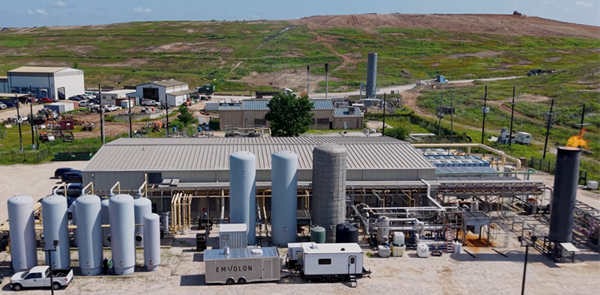
Emvolon, an MIT spin-off, has developed technology that converts methane-rich waste gases into liquid fuels using repurposed automotive engines as chemical reactors. The system targets methane sources at landfills, wastewater facilities and industrial sites, addressing a significant unutilised global methane resource.
The technology operates through compact, containerised processing units deployed directly at waste sites. Rather than centralised industrial methanol production requiring extensive pipeline infrastructure, Emvolon's modular design enables on-site biogas-to-methanol conversion, reducing transportation requirements and capital expenditure on distribution infrastructure.
The process integrates methane conversion with existing engine technology in a configuration distinct from conventional methanol production. On-site processing eliminates the need for pipelines or long-distance transport, enabling economically viable conversion at smaller, dispersed methane sources previously unviable for centralised processing.
Emvolon estimates that globally, over 480 billion cubic metres of methane is wasted annually across landfills, agricultural operations and industrial sites. This unutilised resource represents significant energy value, with on-site conversion enabling local liquid fuel production from otherwise-flared or vented methane.
Emmanuel Kasseris, Emvolon CEO, characterised the technology as addressing energy security and supply chain resilience through localised liquid fuel production, reducing dependence on imported energy sources and long-distance fuel transport infrastructure.
The company targets applications across heavy industry sectors including shipping and aviation, where liquid methanol offers logistical compatibility with existing fuel handling infrastructure. For recyclers and waste operators, the technology provides a commercial route for difficult-to-utilise waste gases that currently represent environmental liabilities.
Emvolon was founded in 2021 based on MIT research and is now advancing toward commercial deployment, currently constructing its first commercial-scale system in North America. The company has partnered with Montauk Renewables and Freepoint Commodities to support scaling.
The modular containerised design positions the technology for rapid site deployment across diverse waste facility types without requiring major energy infrastructure expansion — a significant advantage for operators at landfills, municipal wastewater treatment plants and industrial facilities generating methane-rich biogas streams.
The technology represents a distributed biogas valorisation pathway, converting landfill and industrial methane into transportable liquid fuel without centralised processing facility requirements.