



← Go Back
Volume 8, Issue 4
Electricity generation from fire
Feature
Biomass heating systems likestoves, inserts or fireplaces usually include electrical equipment such as fans or pumps, which require external energy input to work. This means that not all energy coming from biomass heating equipment comes directly from renewable sources such as wood.Could we generate electricity directly from fire?
Concrete in action
Feature
For a popular long established farm business near Reading, UK, JP Concrete has created phase one of an all-encompassing storage and safety solution to ensure the smooth and efficient operation of a new anaerobic digestion (AD) plant. Located at Hill Farm, renowned meat and vegetablesuppliers Butlers Services,needed to create concretebunding around its threedigestate tanks, as well as asilage...
[read more]
Coal-to-biomass: The wrong conversion?
Feature
The Natural Resources Defence Council(NRDC) sees coal-to-biomassconversions as the wrong path to take for the world’s coal phase out journey. Here, Liz Gyekyeinterviews senior advocate Sasha Stashwick about the organisation’s views.
Sustainable maize farming
Feature
Maize is a very useful crop. It feeds livestock,and it is a key energy source for anaerobic digestion (AD). Securing a reliable feedstock supply is vital to the profitability of any AD plant. Most farmers will have had a straightforward harvest, but maize has the tendency to leave the ground totally bare.
Sweden's journey to becoming a bioenergy leader
Feature
Sweden doesn’t have any of its own sources of fossil energy. To understand how it developed into a world leading nation in terms of exploiting renewable energy,we must make a brief return to the end of the twentieth century. Then, the country’s energy use was entirelydependent on imported oil.
Preparing Sweden for a fossil-free future
Feature
Sweden is one ofthe most ambitious countries in the world when it comes to climate change mitigation. The government aims at making Sweden the first climate neutral welfare country at the latest by 2045. Between 1990 and 2014 the greenhouse gas (GHG) emissions of the country decreased by almost 25%, mainly thanks to the efforts of the energy sector.
Power to the masses
Feature
At first sight, developmentof the biomass power sector may appear to have been relatively quiet in recent years, tempered by policy-makers preference for alternative renewable and low-carbon technologies, and weighed down by negative reporting by NGO’s and the press over sustainability impacts associated with importation and use of forest products for energy
The Siberian wood pellet experience
Feature
Siberian Wood Pellets decided to invest in its new projectin 2014, when two large sawmills in the Irkutsk region: LDK Igirma (Novaya Igirma settlement, three lines at five tonnes per hour) and TSLK (Ust-Kuttown, two lines at five tonnes per hour), both of which are members of the National Timber Association — Russian Forest (NTA), reached full capacity and the amount of unsaleable products...
[read more]
Wood pellet and power cogeneration
Feature
In the beautiful area of Ledro Lake in Trentino Alto Adige (Italy), near the more famous Garda Lake, an innovative project has been created, installed and started-up from the wood waste of a major sawmill (packaging productsmanufacturer) situated in the valley of the lake.The project has been developed in two stages. The first saw the of an organic rankine cycle(ORC) cogeneration power plant with...
[read more]
Wood chippers back from the brink
Feature
Juha Vaahterinen’s grandfather founded KuljetusliikeVaahterinen (KV)in 1952, and the company developed into one of Finland’s first bioenergy businesses in the mid-80s. The company grinds and chips in forests throughout eastern Finland and sells off the end product. Processing the material they encountered in the forest became a daunting task with the equipment they had six yearsago,...
[read more]
A cheer for green beer
Feature
An innovative brewery in Alaska has installed asonic horn to help improve ash flow and prevent clogging in the exhaust stream of a boiler system that uses spent grain from the brewing process as fuel. Ash accumulation issues had been forcing the company to shut down its equipmentto cool and manually clean the swirlers and collectors of its ash handler on a weekly basis.
pellet potential
Feature
In 2016, Tramco, acompany with 50 years’experience in the material handling industry, was involved with several projects relating to the biomass sector. This included a project contracted by pellet producing company Colombo Energy out of Greenwood, South Carolina, afully owned subsidiary of TheNavigator Co.
Tightening your (conveyor) belt
Feature
Biomass Engineeringand Equipment (BE&E) of Columbus,Indiana, US, has provided material handling solutions for two advanced waste-to-energy gasification plants in Tennessee for Aries Clean Energy (formerlyPHG Energy). The Smart Conveyor and Smart Container products from BE&E have proven to be the right choice for the reliability and efficiency called for by these plants.
Old and familiar, redefined
Feature
Shredding and screening are the key processing steps needed to turn waste into the desired raw material. As familiar as they may be, Komptech can always find ways to give them a new spin.
What's in a wood?
Feature
Throughout the UK, woodlands presentan important natural resource, and many of these woodlands are currently managed and maintained for a variety of easons such as commercial timber production, small-scalet imber production, woodfuel, sporting, recreation, habitatconservation, landscape and amenity.
Making a profit as a willow grower
Feature
Can you make money as willow grower? It might not be a verylikely scenario, but it can be economically viable. Here’s how:• Firstly, you need dry, first grade wood chips,whole-rod harvested from high yielding, well managed willow stands.
The beetles and the biofuels
Feature
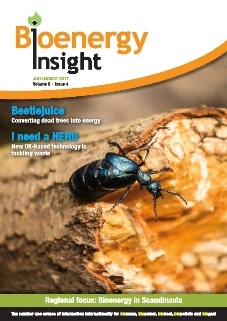
Over the course of the last decades, the mountainpine beetle has infested trees in 40million acres of forest in the western United States and Canada. The beetle attacks and inserts fungi into the wood, compromising the transport of nutrients and eventually leading to the death of the trees.
I need a HERU
Feature
Nik Spencer is a sustainable entrepreneur and inventor of the Home Energy Recovery Unit (HERU). Spencer has started a number of companies. These included a refuse vehicle hire company that grew to a fleet of 180 trucks, alongside a recycling facility using custom-designed materials recovery facility equipment, developed using processes learned from the food and drink industry.
Fossil fuels out, biomethane in?
Feature
Scandinavia is at the forefront of greenhouse gasreductions. Sweden, for example, hasset itself the goal of reducing traffic-related fossil fuel consumption by 70% by 2030,and of becoming fossil fuel free by 2050. To reach such ambitious goals, every bit of the energy efficiency andr enewable energy potential available will have to be tapped.
Leading the way
Feature
Having formed the Local Residue Energy(Loreen) project in spring 2016, MevaEnergy and its partners are set to celebrate their first anniversary. Following an extensive feasibility study and work to optimise its demonstration system, Loreen’sproject management team has now secured €2.9 million of investment from InnoEnergy, the European engine for sustainable energy innovation