



← Go Back
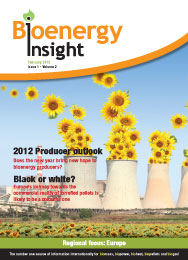
Volume 3, Issue 1
IEA: action required
Feature
The International Energy Agency (IEA) has released its annual World Energy Outlook for 2011, sending a strong message to those that attended the Climate Change Conference in Durban, South Africa. The IEA warns the world is locking itself into a system that is becoming more and more reliable on fossil fuels and if new policy measures are not put in place within the next two years then the...
[read more]
Black or white?
Feature
In Europe pellets are usually made from wood. White pellets are made from clean, usually new, wood ground down to fine particles and compressed in a pellet mill. It is possible to use round wood, for example logs or forest waste or even recycled wood, but the risk of contamination in recycled wood makes manufacturers and potential customers wary of it. Such pellets, sometimes called class B, fall...
[read more]
Dutch developments
Feature
The Dutch government’s recently unveiled Energy Report 2011 included proposals to make the use of some biomass mandatory at the country’s coal-fired energy plants and for the nation’s use of renewable energy to be increased from 4% in 2010 to 14% by 2020. In anticipation of the new proposal being passed, some coal fired power stations in the south of the country are already...
[read more]
Hitting the target
Feature
Climate change has long been recognised by the EU as a crossborder phenomenawhere coherent EU action is needed. The Europe 2020 Strategy for smart, sustainable and inclusive growth includes five headline targets that set out where the EU should be in 2020. On climate and energy EU states are committed to reducing greenhouse gas emissions (GHGs) by 20%, increasing the share of renewables inthe...
[read more]
Biocoal the goal
Feature
By 2020 it is estimated the European wood pellet market will grow by about 25-70 million tonnes. Currently production is just under 9.5 million tonnes and if the market was to expand by this much then wood biomass supply would need to rise to at least 45 million, which means more trees will need to be harvested in the process. The largest producers of wood pellets in Europe at the moment are...
[read more]
Beau power from CHO-Power
Feature
In France, more than 32 million tonnes of waste is produced each year. Not only this, but a significant amount of biomass from agricultural and forestry sources are not used to their full advantage. CHO-Power has taken this waste, creating a new technology system that is adaptable to a range of feedstock, turning it into electricity. With the first plant scheduled to finish construction in the...
[read more]
Biogas en masse in Scandinavia
Feature
Scandinavia is leading the way for biogas-fuelled public transport. At the end of January 2012, bus passenger transport company Nobina was awarded the country’s largest ever contract for biogas powered buses in Norway. Under the contract, the existing bus fleet will be renewed with more environmentally-friendly vehicles. More than 50 of the new 78 buses will run on biogas and a new gas...
[read more]
The race is on
Feature
Germany has an ambitious target to continue ramping up its consumption of renewable materials for energy production. It hopes to achieve 35% by 2020; at least 50% by 2030; a minimum of 65% by 2040; and at least 80% by 2050. If the nation sticks to these goals, carbon emissions will be reduced 40% by 2020 from their 1990 levels, and by up to 95% by 2050. In view of these ambitious energy targets,...
[read more]
Best tool for the job
Feature
With rapidly expandingwood fibre markets driven by recycling mandates, the demand for wood waste grinding equipment is on the rise. But a change in feedstock also requires a change in grinding equipment. US-based Kolbeck started out grinding agricultural materials for use as livestock feed, and branched out into custom grinding to fill the need of local farmers. Today, an integral part of the...
[read more]
Bioenergy chippers 64 â
Feature
The recent drastic spike in oil prices sent more thana few US states scrambling, both financially and in efforts to ensure their residents’ energy needs were met. For man yit was — and continues to be— a tremendous challenge. However, for Maine, it was a time when past efforts to encourage the developmen tof a comprehensive biomass programme bore fruit… and did so in a...
[read more]
How to stop worrying and love the bankers
Feature
The Renewable Heat Incentive policy (RHI) was introduced in November last yearas a game-changer for the UK renewable heat market. It’s also a good example when illustrating the importance of finance: support tariffs create the market opportunities; finance allows the market to take advantage of them. The RHI is ambitious — its objective is to grow renewable heat from about 1.5% to 12%...
[read more]
Incineration goes up in smoke
Feature
Incinerating waste to generate energy has a bad reputation. In February, local residents protested in Scotland about a proposed development to be built by Grundon Waste Management, converting waste to energy through an incineration process. The residents were worried that the £100 million (€120million) project would harm the environment, as well as the health of the people in the local...
[read more]