






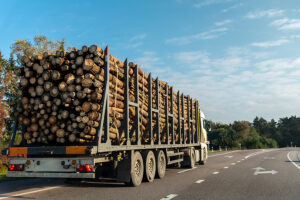
Dutch law enforcement authorities are considering a criminal investigation into RWE, one of the Netherlands' largest energy providers, over allegations that the company misrepresented the source of wood pellets used to generate energy at its power plants.
The case has been brought by two forest advocacy groups — Netherlands-based Comité Schone Lucht and UK-based Biofuelwatch — who allege that hundreds of thousands of tonnes of wood pellets RWE imported from Malaysia were sourced not from sawmill waste, as certified, but from whole trees. The Dutch Public Prosecution Service is expected to decide how to proceed by the end of March.
RWE, which has received an estimated €2.4 billion in Dutch biomass subsidies through 2027, denies any wrongdoing, stating it has at all times complied fully with Dutch and EU certification requirements.
At the centre of the dispute is the Green Gold Label certification scheme, under which RWE's Malaysian imports are classified as Category 5 biomass — a designation reserved for pellets made entirely from sawmill residues, which carries lighter regulatory scrutiny.
Advocates argue the scheme relies on self-certification with no independent site visits, and that the volumes involved cast doubt on the sawmill-waste claim.
The Dutch climate minister acknowledged in a November 2025 report that the certification system has inherent weaknesses owing to its voluntary nature, though her department found no grounds for enforcement action against RWE at that stage.
The criminal complaint, filed in January 2026 after the advocates appealed that ruling, covers alleged certification fraud, potential document forgery and violations of international human rights law relating to deforestation. A parallel civil appeal has also been lodged at the District Court of the Hague.
Wood pellets currently account for around 60% of renewable energy across the EU, with the Netherlands among the bloc's highest consumers by volume.
Forest advocates and scientists have long disputed the sustainability credentials of forest biomass, arguing that burning wood emits more carbon per unit of energy than coal and that forest regrowth takes up to a century to recapture the released carbon — a timescale incompatible with near-term climate targets.
Source: Mongabay