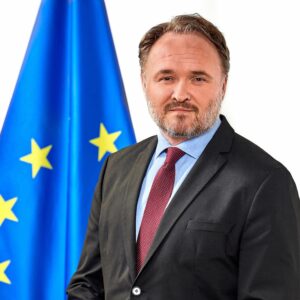






Senior figures from Europe's bioenergy industry have met with Energy Commissioner Dan Jørgensen and officials from the European Commission's energy and environment directorates to make the case for biomass in the EU's upcoming Heating and Cooling Strategy. The meetings were coordinated by industry association Bioenergy Europe.
The delegation argued that Europe's shift away from fossil-fuel heating must remain practical and adaptable to local conditions, warning that over-reliance on a single technology risks leaving households and businesses behind.
Jean-Marc Jossart, secretary general of Bioenergy Europe, said the transition would only succeed if it worked for people in practice. "That means keeping heat affordable, reducing dependence on fossil fuels, and making the most of Europe's own renewable resources," he said. "Bioenergy is already part of that answer, across homes, industry and district heating. As the EU shapes its next policy steps, that practical contribution should not be overlooked."
Industry representatives said bioenergy is already supplying renewable heat across residential, industrial and district heating applications, and can help reduce pressure on electricity grids during winter demand peaks. Speakers stressed that electrification alone will not meet all heating needs across Europe's diverse building stock and industrial base.
Jean-François Sidler, chief executive of stove manufacturer Stûv, said decarbonising heat was not about imposing a single solution everywhere. "It is about using the right technologies in the right places to replace fossil fuels in a practical way," he said, adding that biomass heating in buildings enhances energy security while improving overall system flexibility.
Stefan Ortner, chief executive of biomass boiler manufacturer ÖkoFEN, cautioned that restricting consumer choice risked pushing people back towards fossil systems. "Consumers should be free to choose the solution that best fits their building, local grid, and energy cost," he said. "If we make renewable heating more complex or restrict choices, people risk falling back on fossil systems instead."
The group also raised longer-term opportunities including bioenergy with carbon capture and storage and biochar as tools for meeting climate targets beyond straightforward emissions reduction.
A separate meeting with the cabinet of Environment Commissioner Jessika Roswall focused on bioenergy's role in the circular economy, with the delegation highlighting how forestry and agricultural residues, side streams and post-consumer biowaste can be converted into renewable energy, supporting local supply chains and reducing waste. Industry representatives said predictable regulatory conditions are essential to allow circular and renewable heating solutions to continue scaling across the EU.
Bioenergy sector urges EU to keep heating transition technology-neutral