



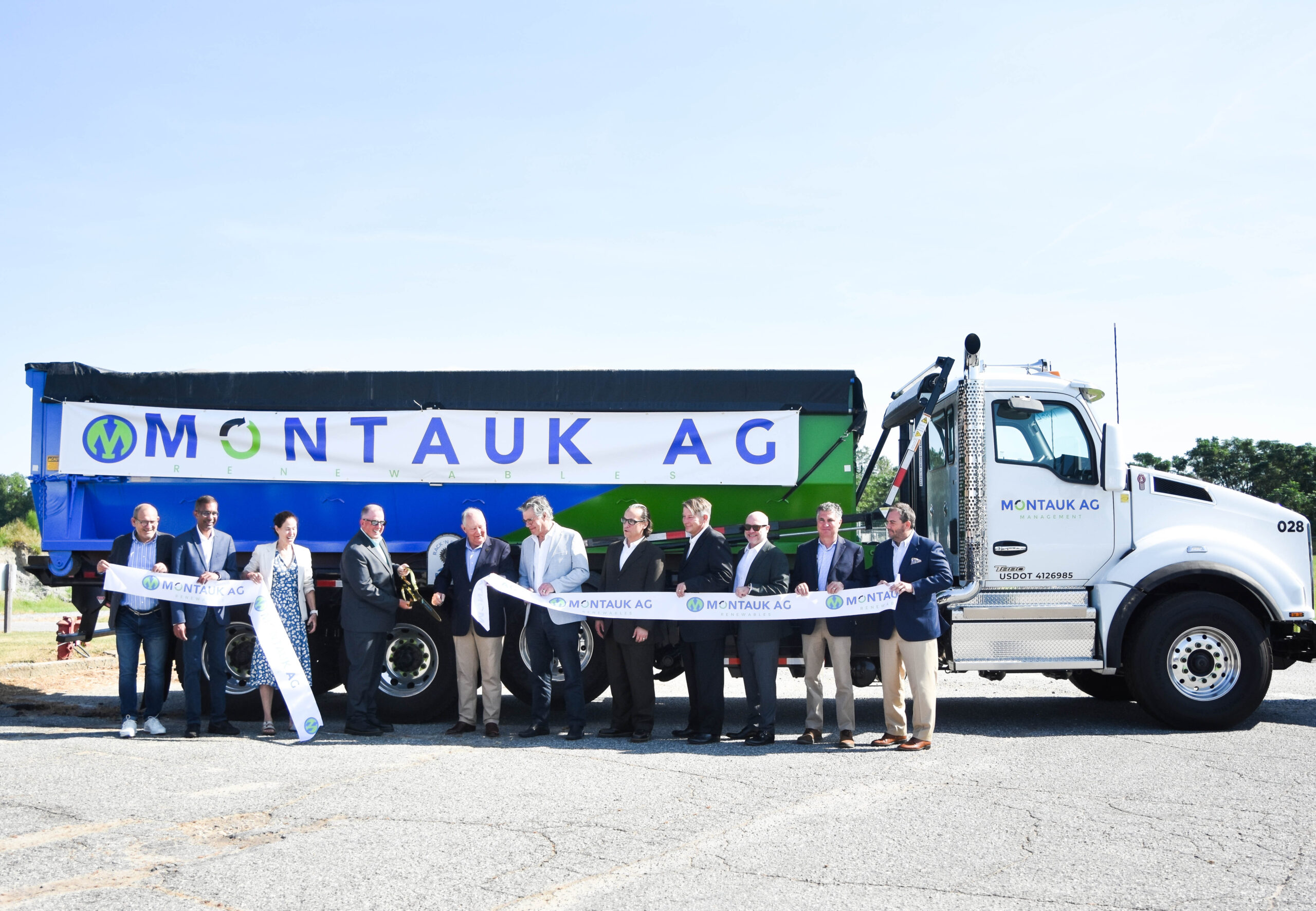
Montauk Renewables has officially opened its facility in Sampson County, North Carolina, representing a $200 million capital investment in agricultural biogas-to-energy conversion.
The project converts swine waste into renewable natural gas and electricity, whilst producing biochar as a co-product.
The Turkey facility transforms the former Bay Valley Foods Distribution Centre into an agricultural waste management and renewable energy operation.
Montauk has established long-term agreements with more than 80 farming locations across Sampson County, providing access to approximately 415,000 hog spaces targeted for the project's initial phase of operation.
Montauk Renewables specialises in biogas capture and conversion, preventing methane release into the atmosphere whilst converting captured biogas into renewable natural gas (RNG) or electrical power for the grid.
The company operates 14 projects across the United States, with ongoing development in California, Idaho, Ohio, Oklahoma, Pennsylvania, North Carolina, South Carolina and Texas. The company has more than 30 years of experience in landfill methane and agricultural biogas systems.
"As of the end of August, we have entered into long-term agreements with over 80 separate farming locations, providing us access to more than 415,000 of the hog spaces we are targeting for our first phase of development," said Sean McClain, Montauk Renewables Chief Executive Officer.
"Farmers are the backbone of the North Carolina economy, and we are thankful to partner with them and Sampson County."
The facility captures methane from swine manure and converts it into renewable energy products. The project also produces biochar, a solid residue that improves soil nutrient and water retention.
Senator Brent Jackson, a Sampson County farmer and leader on agricultural issues in North Carolina's General Assembly, highlighted this dual benefit: "The biochar produced here will also improve nutrient and water retention, supporting healthier soil and stronger crop yields."
The operation addresses a significant intersection of agricultural waste management and renewable energy production.
Swine production generates substantial waste streams across North Carolina, where agriculture represents the state's top industry with annual economic impact exceeding $100 billion.
The state supports approximately 42,000 farms across 8 million acres, with the agricultural sector supporting roughly one in five jobs across the state.
By converting swine waste into energy, the project reduces methane emissions whilst generating revenue from renewable energy products.
Montauk sells both RNG and renewable electricity, taking advantage of environmental attribute premiums available under federal and state policies that incentivise renewable energy production.
The facility's opening signals growing commercial interest in agricultural biogas projects in the United States, particularly in regions with concentrated animal agriculture and established renewable energy incentives.