



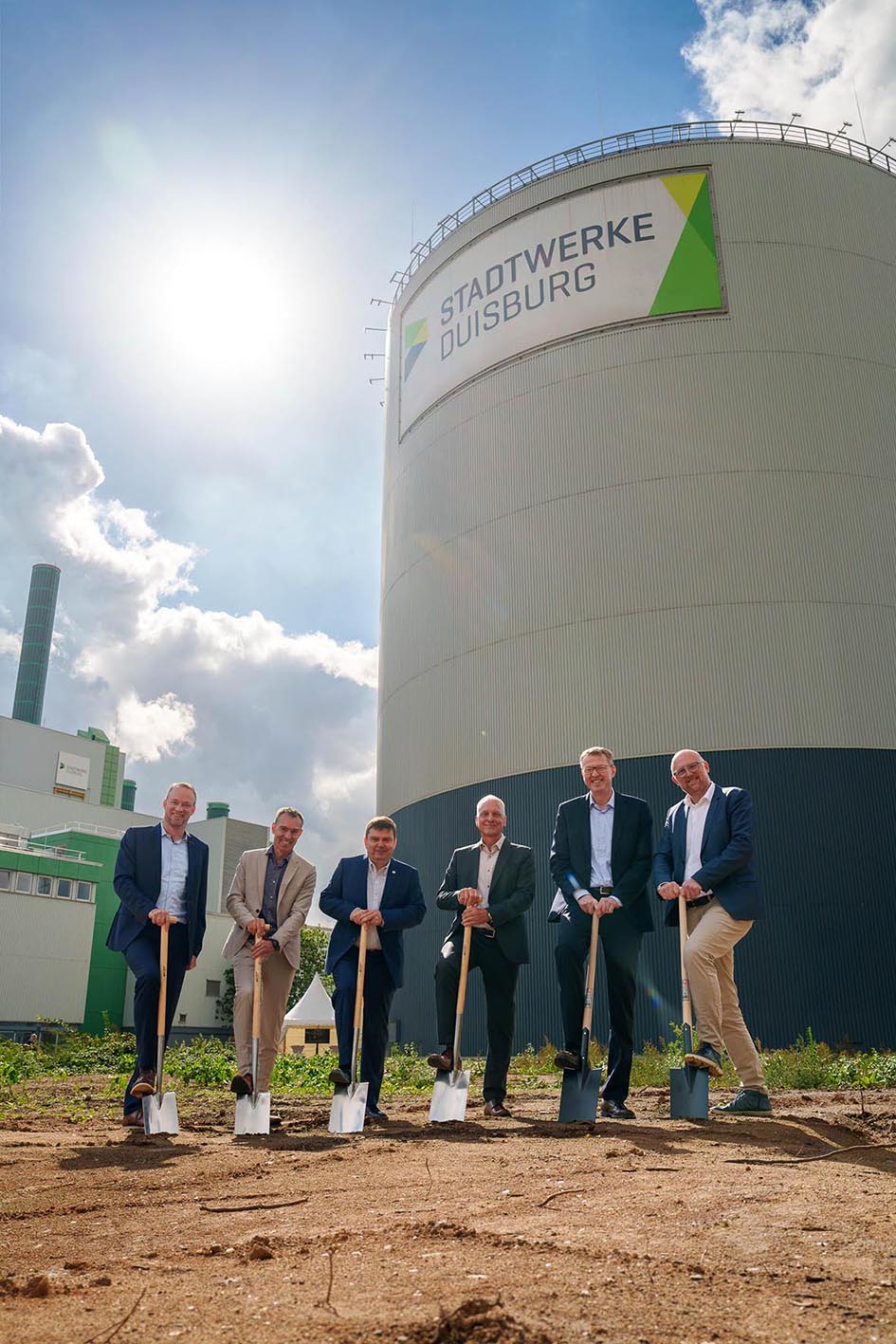
Stadtwerke Duisburg is replacing its ageing gas turbine plant with a hydrogen and biomethane-ready combined heat and power facility, positioning itself to exploit falling green gas costs as Germany's energy transition accelerates.
The €80 million HKW 3c project at the Wanheim Energy Park will deploy 15 gas engines with combined electrical output of 67.5 MWel and thermal output of 74 MWth, achieving overall efficiency of 94.9 per cent.
All units are designed for future hydrogen operation, but the plant's immediate opportunity lies in biomethane.
"As the main contractor, we are responsible for the planning, construction and turnkey handover of the combined heat and power plant," says Marco Weiss, Managing Director of ETW Energietechnik GmbH, which is leading the build.
"The scope of work covers all key trades – from the structural and civil engineering of the 80 x 30-metre building, the mechanical and plant engineering, and the three 60-metre-high chimneys, right through to the electrical and heating systems."
The timing is strategic. From 15 September 2026, German-produced biomethane will be cheaper than fossil natural gas for the first time, opening a competitive pathway for utilities to blend renewable gases without technical modification.
Stadtwerke Duisburg can gradually increase biomethane content to any ratio up to 100 per cent.
"The plant can be flexibly converted to 100 per cent hydrogen operation in the future," Weiss adds, but the near-term value lies in biomethane's cost parity and fungibility with natural gas.
Flow temperatures reaching 120 °C will supply the local district heating network, supporting Stadtwerke Duisburg's strategy to decarbonise heating supply over the coming decade. The HKW 3c is expected to enter operation in 2027.