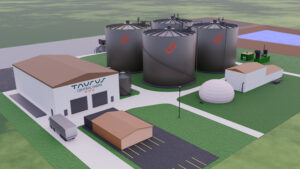






Taurus Canada Renewable Natural Gas Corp. has been awarded C$10 million in funding from the Government of Alberta’s Technology Innovation and Emissions Reduction (TIER) programme to build what is described as the world’s first fully integrated anaerobic digestion and carbon sequestration facility producing renewable natural gas (RNG) exclusively from livestock manure.
The project will be developed at the Kasko Home Lot in Coaldale in partnership with Kasko Cattle Company and KCL Cattle Company.
The facility is designed to process approximately 130,000 tonnes of manure annually, converting it into around 360,000 gigajoules of RNG. The gas will be injected directly into the natural gas pipeline network as a drop-in fuel. In addition to producing energy, the plant will generate a nutrient-rich digestate suitable for use as a sustainable fertiliser.
A key component of the project is the capture and permanent sequestration of biogenic carbon dioxide produced during the anaerobic digestion process. By preventing methane and CO₂ emissions from entering the atmosphere, the developers say the plant will deliver significant environmental benefits.
According to project estimates, the RNG output will be sufficient to power around 4,500 homes. The displacement of fossil fuels is expected to reduce emissions by an amount equivalent to removing approximately 3,800 cars from the road.
The funding forms part of a wider C$28 million investment announced by the Government of Alberta to support six new technology projects aimed at reducing costs, improving industrial efficiency and lowering environmental impacts. The funding is being delivered through Emissions Reduction Alberta under the TIER programme.
Phillip Abrary, chairman and chief executive of Taurus Canada RNG, said the combined government funding and company capital commitment would enable the delivery of a pioneering renewable energy and carbon capture project in Alberta’s cattle farming region. He described the initiative as a first-of-its-kind development that could help position the province as a leader in renewable energy and sustainable agricultural practices.
Alberta’s Minister of Environment and Protected Areas, Grant Hunter, said the province is investing in home-grown innovation to increase energy production while reducing emissions and maintaining industrial competitiveness.
Construction of the facility is expected to begin this summer, with completion and full commercial operation targeted for January 2028.
Taurus Canada secures $10m for world-first integrated manure-to-RNG and carbon sequestration facility