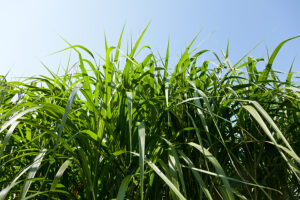






A new international initiative aims to help Ukraine rebuild its energy infrastructure and promote low-carbon development by growing Miscanthus on abandoned and contaminated land.
Terravesta, a specialist in Miscanthus cultivation, has announced the launch of the MERIT (Miscanthus Evaluation for Resilience, Innovation and Transformation) project in December 2025.
The initiative seeks to convert unused land into a renewable energy resource to support Ukraine’s energy recovery.
Locally grown Miscanthus will supply small and medium-scale power plants, helping decentralise the country’s energy system and reduce its vulnerability to disruptions. The crop will also provide raw materials for the domestic building materials sector, lowering dependence on imports.
The project is supported by the UK government through its InnovateUkraine programme and funded by the Foreign, Commonwealth and Development Office (FCDO) and UK International Development.
MERIT will develop scalable Miscanthus supply chains and agronomic models to strengthen Ukraine’s domestic biomass production while creating economic opportunities for farmers.
Florian Ilias, Terravesta’s managing director, said: "The project has two main goals: energy system impact and socioeconomic impact. In the short term, it helps local energy economies thrive and restores land no longer suitable for food production. In the long term, it supports Ukraine’s transition to a secure, low-carbon economy."
He added that MERIT will also generate jobs, sequester carbon, rehabilitate contaminated land, improve energy access, and promote social inclusion.
The project brings together an international partnership. Terravesta leads the initiative, working with Liverpool John Moores University as scientific partner, LLC Miscanthus Technology (Ukraine) as technology lead, and LLC Fendt (Ukraine) for remote monitoring and agronomy support.
"MERIT delivers practical support at a critical time for Ukraine," said Florian. "By unlocking Miscanthus production, we can replace lost energy capacity, reduce carbon emissions, and build a secure, local biomass resource for heat and power."
The project will establish demonstration sites across different regions of Ukraine, provide training and agronomic guidance for farmers, and evaluate logistics, processing, and market pathways for Miscanthus bioenergy. It will also generate evidence on carbon sequestration and biodiversity benefits to inform policy frameworks.
Scaling up Miscanthus cultivation will help Ukraine develop a decentralised, home-grown renewable energy source, reduce reliance on fossil fuels, regenerate soils, support biodiversity, and advance the country’s net-zero goals.
"MERIT represents targeted action using UK expertise to support Ukraine’s recovery, develop climate-friendly energy systems, and empower farmers in building a sustainable future," Florian added.
New project to boost Ukraine’s energy security using miscanthus biomass