





India's Biotechnology Industry Research Assistance Council has announced a significant funding opportunity for organisations developing green hydrogen from biomass and other alternative feedstocks.
The programme, operating under the National Green Hydrogen Mission, makes available INR 100 crore (approximately £10 million) to support pilot-scale demonstration projects across the country.
The initiative specifically targets biomass-based hydrogen production alongside other innovative approaches including wastewater utilisation and floating solar integration. Applications opened on 26 December 2025 and will close on 27 January 2026.
Biomass takes centre stage
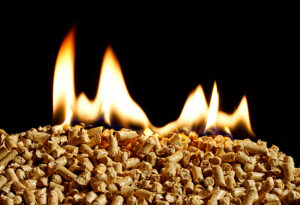
Biomass pathways represent a key focus area for the programme. Unlike conventional electrolysis methods, biomass gasification and other biological routes offer potential advantages in regions with abundant agricultural residues and organic waste streams. Projects utilising crop residues, forestry waste, municipal solid waste, and industrial organic by-products are all eligible for consideration.
The funding structure allows up to INR 25 crore (approximately £2.5 million) per project. Private sector applicants can receive support covering 80 per cent of eligible equipment costs, whilst government organisations may access full equipment funding within the overall cap.
Technical requirements and timeline
Eligible technologies must have reached Technology Readiness Level 5 or 6, meaning they have been validated at laboratory scale. Early-stage research proposals will not be considered under this round.
Selected organisations face an 18-month delivery window: 12 months for establishing pilot facilities and six months for operational demonstration. Projects demonstrating identified end-users for the hydrogen produced will receive preferential treatment during evaluation.
Permitted expenditure covers equipment and retrofitting costs directly related to hydrogen production. The programme explicitly excludes funding for civil construction, land acquisition, staffing, consumables, water infrastructure, and renewable power generation equipment.
Application and evaluation process
Eligible applicants include Indian companies, startups, limited liability partnerships, academic institutions, non-governmental organisations, and joint ventures meeting specified ownership criteria. Organisations already receiving support under other government hydrogen schemes cannot apply.
Assessment follows a multi-stage process. BIRAC conducts initial administrative screening before technical evaluation by a specialist committee. Shortlisted applicants present to a Project Appraisal Committee chaired by the National Green Hydrogen Mission Director, with final approval from the Mission's Advisory Group.
Evaluation criteria emphasise innovation level, technical feasibility, scalability potential, commercial viability, production capacity, and availability of hydrogen offtakers. Projects with applications in cooking, heating, decentralised power generation, and off-road mobility receive priority consideration.
Financial governance
Recipients must provide a bank guarantee worth 20 per cent of the sanctioned grant. Funding releases follow milestone achievement, with delays or non-compliance potentially triggering penalties including project cancellation and fund recovery with interest.
Any revenue generated from hydrogen sales during the pilot phase may be retained by the executing organisation, providing potential offset against project costs.
Strategic context
The programme aligns with India's National Green Hydrogen Mission, launched in January 2023 with total funding of INR 19,744 crore (approximately £2 billion). The mission aims to position India as a global centre for green hydrogen production, use, and export.
Government officials state that selected pilot projects will generate essential data on technical feasibility, safety protocols, scalability, and commercial viability. These findings will inform future policy development and support large-scale deployment of alternative hydrogen production methods nationwide.
For biomass-focused developers, the programme represents a substantial opportunity to demonstrate conversion technologies at meaningful scale whilst contributing to India's renewable energy transition and agricultural waste management objectives.