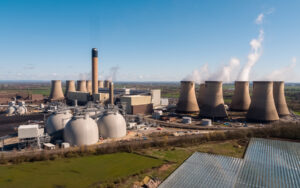






Energy company Drax Group has confirmed plans to cut up to 150 jobs next year while reporting record levels of renewable power generation in 2025.
New documents unearthed by GMB, including a Section 188 notice served to staff, indicate that between 89 and 148 roles are expected to be lost at the plant around 31 March 2027. The cuts could represent more than 30% of the site’s 465-strong workforce.
The announcement came as the group published its full-year results for the twelve months to 31 December 2025, which showed strong operational performance but a fall in profitability after large non-cash impairment charges.
Adjusted EBITDA came in at £947m, down from £1,064m in 2024, while operating profit dropped sharply to £241m from £850m. Profit before tax fell to £190m from £753m.
The reduction in operating profit was mainly driven by a £378m impairment charge covering assets including the Canadian pellet business and the paused Longview pellet project, reflecting weaker expected margins and a constrained Canadian fibre market.
Chief executive Will Gardiner said 2025 had been a record year for renewable generation, with the company producing more low-carbon electricity than ever before and helping supply around 6% of UK power and 11% of UK renewable generation.
Biomass generation reached 15.0TWh during the year, up from 14.6TWh in 2024, while pellet production rose 5% to 4.2 million tonnes. However, adjusted EBITDA from the pellet business fell due to internal pricing adjustments and weaker Canadian fibre market conditions.
The group increased its full-year dividend by 11.5% to 29.0 pence per share and said it continued its nine-year run of dividend growth.
Job cuts and union reaction
Union representatives criticised the redundancy plans.
Deanne Ferguson, senior organiser at GMB, said the move was “a devastating blow” for workers and the local community.
She added that the company had “trousered vast sums of public money” but was now seeking redundancies as support mechanisms were reduced, warning that the approach risked giving net zero policies a bad name and calling on ministers to intervene.
The announcement comes amid broader restructuring as Drax aligns its cost base with its long-term strategy for low-carbon dispatchable power and growth in flexible generation.
Strategy, investment and energy transition plans
Drax said the signing of a low-carbon dispatchable Contract for Difference (CfD) for its power station marked an “inflection point” for the group, providing greater visibility over its role in UK energy security.
The company is investing in flexible renewable and storage technologies, committing around £0.5bn to the development of 710MW of battery energy storage systems and the planned acquisition of optimisation platform Flexitricity, expected to complete around March 2026.
The group is also exploring opportunities linked to rising electricity demand from artificial intelligence and data centre expansion.
It is assessing the feasibility of a 1.2GW-scale data centre at the Drax Power Station site, with an initial 100MW target from 2027 subject to regulatory approval and commercial viability.
Financial position and outlook
Net debt improved to £784m at 31 December 2025, down from £992m a year earlier, supported by operating cash generation of £1.0bn.
The company completed a £300m share buyback programme in October 2025 and launched a further £450m three-year buyback extension.
Looking ahead, Drax expects 2026 adjusted EBITDA to be in line with analyst consensus forecasts. The group is targeting post-2027 adjusted EBITDA of £600m to £700m a year.
The company is also aiming to generate around £3bn of free cash flow from its existing business between 2025 and 2031 before growth investment, with over £1bn expected to be returned to shareholders through dividends and share buybacks.
Capital investment over the period could reach up to £2bn, focusing on flexible renewable generation, energy storage and infrastructure supporting the UK energy transition.
Drax confirms up to 150 job cuts as profits fall despite record renewable generation