






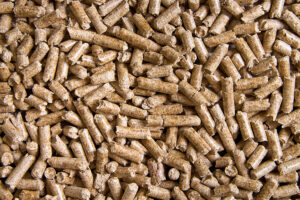
A community-led survey coordinated by the Southern Environmental Law Center across parts of the southern United States has documented concerns about pollution linked to wood pellet manufacturing facilities.
The survey focused on areas where residents live near large biomass plants, including a facility in Northampton County, North Carolina.
Wood pellet plants process trees into fuel pellets that are exported overseas, primarily to Europe and Asia, where they are burned to generate electricity.
While often described as a renewable energy source, the manufacturing process produces dust and emissions that residents say affect air quality and daily life.
The survey was carried out by local residents working alongside environmental organisations, students and legal advocates.
Participants visited households near pellet plants to gather information about health concerns, environmental conditions and quality-of-life impacts associated with nearby industrial activity.
According to the survey findings, residents reported respiratory problems, persistent dust, noise and increased industrial traffic.
These concerns were most frequently recorded in rural communities and in areas with lower-than-average household incomes.
Environmental justice advocates note that heavy industrial facilities are often sited in communities with limited political influence, where residents may face barriers to raising concerns or accessing regulatory processes.
Companies operating such facilities frequently cite economic benefits and job creation, though residents surveyed said they saw limited long-term community investment.
The organisers of the survey say the data supports long-standing community complaints and will be used to inform public awareness efforts and policy discussions related to biomass energy production and environmental regulation.
Further surveying and data collection are expected to continue as part of broader efforts to assess the local impacts of wood pellet manufacturing across the region.