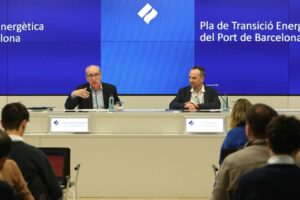






The Port of Barcelona has unveiled plans to produce 100,000 tonnes of sustainable fuels per year, including biomethane and synthetic fuels, as part of its newly approved Energy Transition Plan.
The ambitious strategy, presented on 4 December, aims to reduce greenhouse gas emissions by 85% by 2040 compared with 2017 levels, with an interim target of halving emissions by 2030.
The focus on biomethane and other sustainable fuels is designed to address one of shipping's most pressing challenges: decarbonising maritime transport.
By producing these fuels locally, the port aims to position itself as a key node in maritime green corridors and attract the most efficient and sustainable vessels.
"The Port has a key role in the energy sector and must act as a strategic node that not only imports, stores and distributes, but also produces and ensures the supply of different sustainable energies," said José Alberto Carbonell, president of the Port of Barcelona.
The sustainable fuel production forms part of a broader €1.7 billion investment programme, split between €920 million in private funds and €780 million in public investment.
The plan encompasses over 150 specific actions across four main areas, including decarbonising port activity and ensuring resilience of energy supply.
Beyond biomethane, the port is also exploring hydrogen infrastructure, with the H2MED gas pipeline connection representing a significant opportunity to establish Barcelona as a hub for this emerging fuel.
The plan also includes developing CO2 capture systems and their subsequent use in producing synthetic fuels through circular economy principles.
Hector Calls, director of Environmental Sustainability and Energy Transition, described the plan as "the roadmap to guarantee competitiveness for the Port of Barcelona and protect the wellbeing of future generations whilst preserving our environment."
The emission reductions targeted by 2030 are equivalent to removing 240,000 cars from the road annually. By 2050, the port aims to achieve carbon neutrality.
Barcelona Port plans major biomethane production