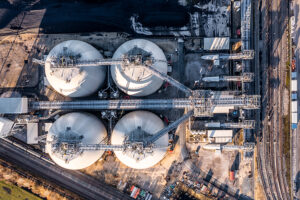






Combining continuous crop cover with anaerobic digestion of manure and biomass could significantly reduce greenhouse gas emissions from dairy farming, though researchers warn careful management is needed to avoid unintended environmental impacts.
A Penn State-led study has found that using anaerobic digestion to convert dairy manure alongside grassy biomass into biogas could reduce the carbon footprint of milk production by over 20% compared with traditional dairy farm management.
The research, published in Environmental Science and Technology, evaluated the "Grass2Gas" approach on a simulated large Pennsylvania dairy farm, combining year-round vegetation cover with anaerobic digestion – a microbial process that converts organic matter into combustible biogas, consisting primarily of methane.
However, the study revealed complex trade-offs. Whilst continuous cover reduces nutrient runoff, growing additional vegetation for anaerobic digestion increased the need for off-farm feed imports in most scenarios, offsetting many water quality benefits from a lifecycle perspective.
"Our research highlights the complexities of integrating anaerobic digestion into farm systems, including the impact on soil biogeochemistry and nutrient balances," said senior author Christine Costello, assistant professor of agricultural and biological engineering at Penn State.
The researchers found that reducing herd size to match available feed resulted in small milk losses comparable to typical wastage levels in the dairy supply chain.
The digestion process changes manure chemistry, particularly how nitrogen is stored and released. This means digestate – the nutrient-rich fertiliser remaining after anaerobic digestion – behaves differently in soil and air than undigested manure, considerably influencing emissions of ammonia, nitrous oxide and nitrate.
"Agricultural and environmental scientists, engineers and policymakers should think about crop and livestock production and energy technology as one interconnected system," said Costello. "When we add an energy-production technology to a farm, we really need to think about how the residual materials will be handled."
The research was supported by the US Department of Agriculture's National Institute of Food and Agriculture.
Anaerobic digestion could cut dairy carbon footprint by 20%, study finds