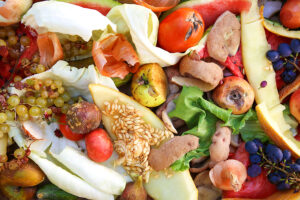






With over one billion tonnes of food waste generated annually worldwide — accounting for 8-10% of global greenhouse gas emissions — a new report from IEA Bioenergy TCP Task 36 has examined the sorting technologies available to help the sector meet tightening regulatory requirements.
Published in February 2026, the report focuses on Germany, which generates approximately 11 million tonnes of food waste per year, nearly 20% of the EU total. The economic cost is estimated at around €30 billion annually, with food waste responsible for 4% of the country's greenhouse gas emissions.
With the EU's mandatory food waste sorting policy in force since 2024, member states face a target of reducing per capita food waste by 50% by 2030 under UN Sustainable Development Goal 12.3.
The report surveys a range of available technologies. Mechanical systems — including shredders, vibrating screens and magnetic separators — offer a baseline capability but show lower efficiency in removing lightweight plastics and multilayer packaging.
Optical and sensor-based systems use near-infrared spectroscopy and high-resolution cameras to differentiate organic materials from contaminants with high precision. AI-based systems, drawing on deep learning algorithms and real-time classification, achieve sorting accuracy exceeding 90%, while real-time processing systems can reach accuracies of up to 99.9% with throughput capacities of several tonnes per hour.
Integration with Industry 4.0 infrastructure enables cloud-based monitoring, traceability and predictive maintenance.
The report also profiles ReFood as a case study in industrial-scale implementation.
Operating 12 anaerobic digestion facilities across Europe, ReFood processes up to 160,000 tonnes of food waste annually per facility using mechanical separation systems, with its Trossingen plant in Germany running dual processing lines for packaged and unpackaged waste streams.
The company reports near-100% material recovery rates, converting food waste into renewable energy, biomethane and biofertiliser.
Advanced sorting technologies key to meeting EU food waste targets